
Engine Oil Types Explained: Synthetic vs Conventional vs Synthetic Blend

Posted:
July 25, 2026

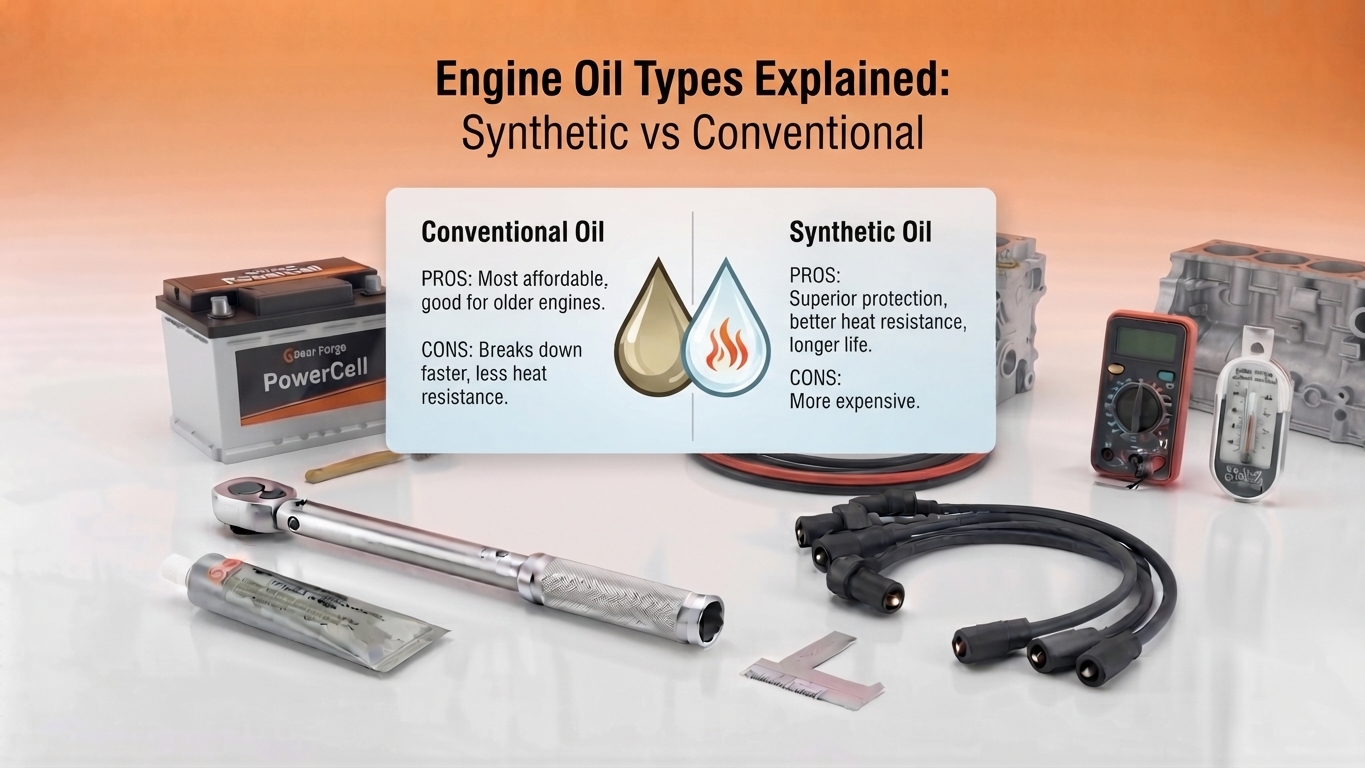
Engine oil is the lifeblood of your vehicle. With so many options on the market, choosing the right oil can be overwhelming. This guide breaks down the differences between oil types and helps you select the best option for your engine.Types of Engine OilConventional Oil: Refined from crude oil, conventional motor oil is the most affordable option. It provides adequate protection for older engines with simple designs and regular driving conditions. Best for light-duty vehicles with straightforward maintenance schedules.Synthetic Oil: Chemically engineered for superior performance, synthetic oil offers better protection at extreme temperatures, improved fuel economy, and longer change intervals. It resists breakdown longer than conventional oil and provides better engine cleanliness. Ideal for modern engines, turbocharged vehicles, and extreme climates.Synthetic Blend Oil: A mixture of synthetic and conventional oils that offers some of the benefits of full synthetic at a lower price point. It provides better protection than conventional oil alone and is popular for trucks and SUVs that carry heavy loads.Understanding Oil ViscosityOil viscosity is indicated by ratings like 5W-30 or 10W-40. The first number (with W) indicates cold-weather performance, while the second number indicates high-temperature viscosity. Always follow your vehicle manufacturer recommended viscosity for optimal protection and performance.At Gear Forge, we carry a complete selection of motor oils from trusted brands. Check your owner manual and choose the oil that best matches your driving needs.
Recent Posts


